
Hatchery Function
Broodstock of coral trout species are routinely bred in Indonesia. Successful breeding has also been carried out in Australia so we assume the techniques to be transferable to the local Seychelles species. I would strongly advise some preliminary work to confirm the viability of the local species prior to development, both from the point of view of availability of wild stock and also research and history of the biology of the species.
In any case, the use of initial wild stock allows for time to develop local breeding and husbandry protocols.
The broodstock are to be housed in special climate controlled units which are
sand filtered and flow to waste. Broodstock can then be manipulated to spawn
as required.

Example of Barramundi Broodstock. Kel Gordon was the first to successfully spawn Barramundi in Western Australia, don't you know
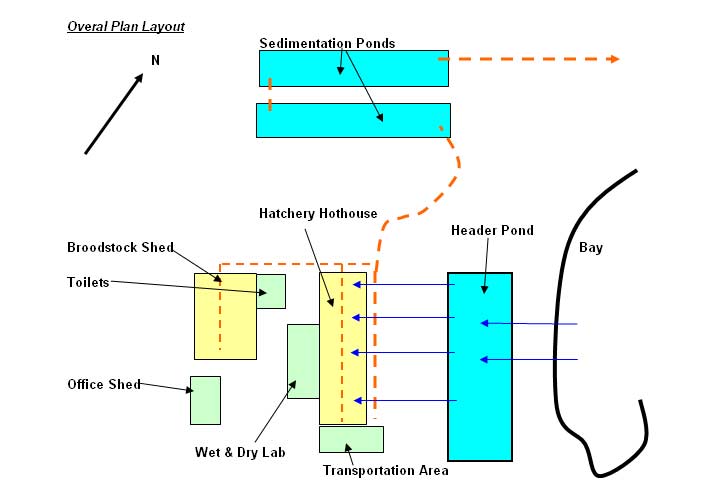
Here is an example layout of a similar culture system. Ironically this hatchery was design to supply off- shore cage culture. The layout and size will be about the same as this project
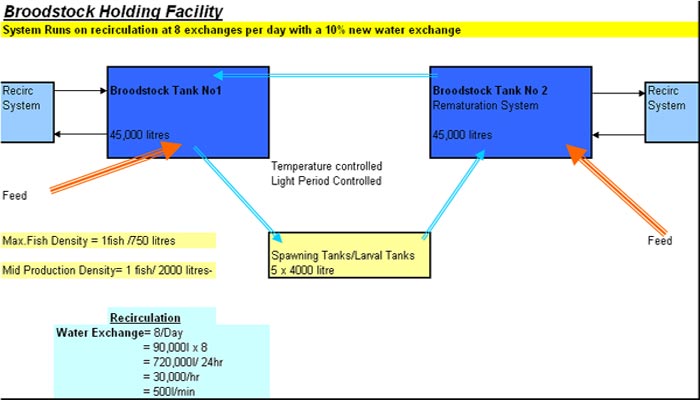
Example of Broodstock Management System Suitable for Reef Species
All aquaculture hatcheries are areas of high quarantine with water filtration
firstly chlorinated, sand filtered and then again filtered to 2 microns.
It is understood that the site is 3 hectares. The growout culture will occupy
approximately 1 hectare while the hatchery and nursery take up about 0.5 of
a hectare.
The sedimentation and effluent control systems will also take up approximately
1 hectare.

Standard hatchery filtration system
 An
example of a similar hatchery set-up design (aquafarmer.com.au)
An
example of a similar hatchery set-up design (aquafarmer.com.au)
Live foods of various sizes and stages are the main aspects of hatchery work as spawning is the relatively easy part.
The significant and hardest component to successful marine culture is feeding the larvae a nutritionally adequate and suitably sized diet.
Modern day tank designs allows for efficient culture and grading of larvae and a suitable diet, expected survival rates should be about 30%.